Acacia Extract (Acacia Mearnsii) Organic
From$8.90
Start typing to search products
 Sold out
 Sold out
 Sold out
 Sold out
 Sold out
 Sold out
 Sold out
Sold out
Sold out
Sold out
Sold out
 Sold out
 Sold out
 Sold out
 Sold out
 Sold out
Sold out
Sold out
Sold out
Sold out
 Sale
Sale
 Sold out
 Sale
Sale
 Sold out
 Sold out
 Sold out
 Sold out
 Sale
Sale
 Sold out
 Sold out
 Sale
Sold out
Sold out
Sale
Sold out
Sold out
 Sold out
Sale
Sold out
Sold out
Sale
 Sold out
Sold out
Sold out
 Sale
Sale
 Sold out
Sold out
Sold out
Sold out
Sold out
 Sold out
Pickup available at eHouse Rishon
Usually ready in 24 hours
Reliable shipping
Flexible returns
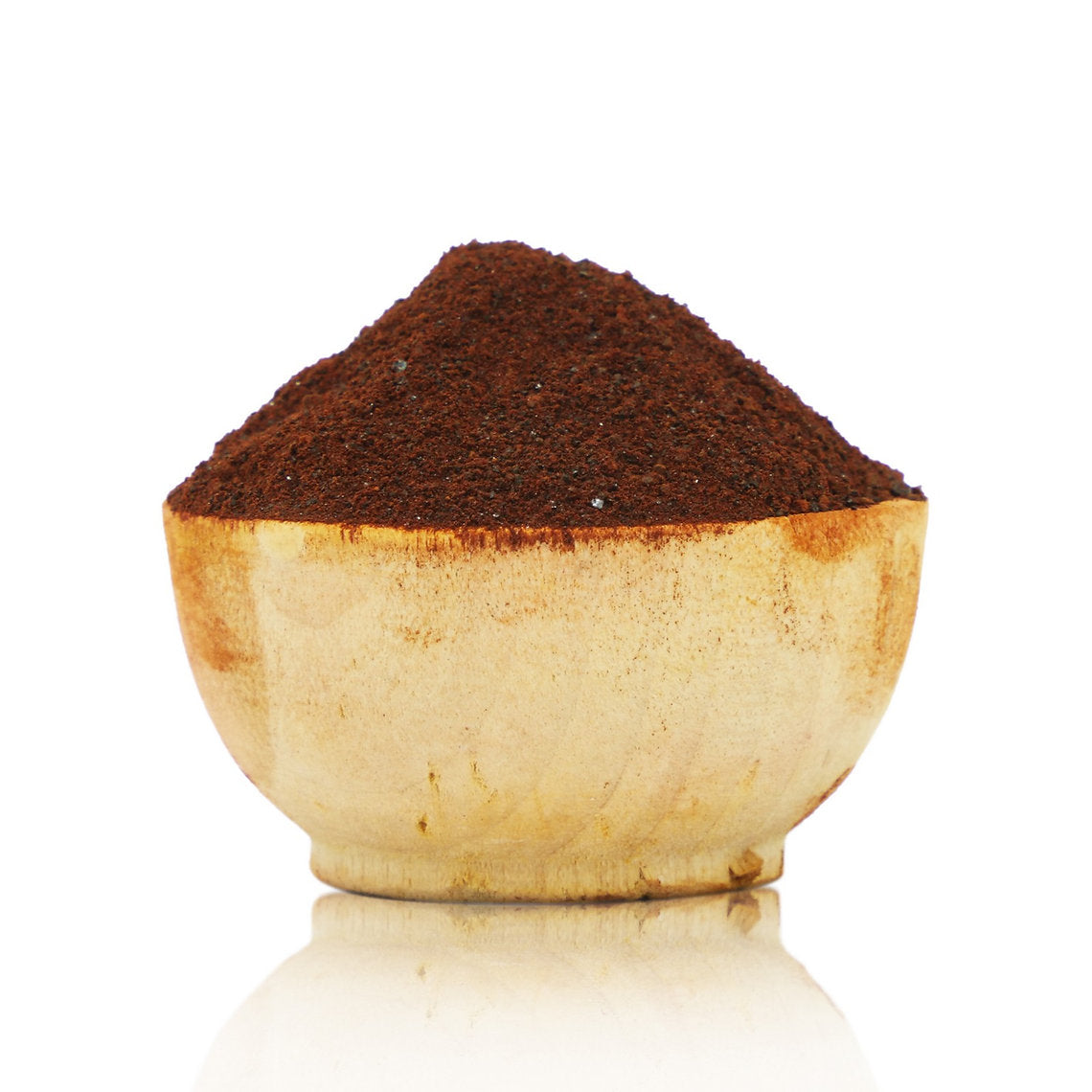
Kakishibu (柿渋), also known as Japanese persimmon tannin, is a traditional natural dye made from the juice of unripe Japanese persimmons (Diospyros kaki). The pressed juice is fermented and aged, allowing its tannins to develop into a distinctive dye and protective finish.
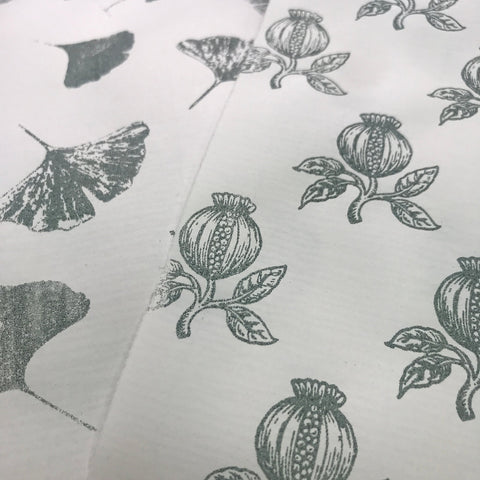
Rich in naturally occurring tannins, Kakishibu has been used in Japan for more than 700 years to color textiles, preserve fishing nets, protect wood, strengthen handmade paper, and increase the durability of everyday materials.
Unlike most natural dyes, Kakishibu does not need to bond with the fiber in a hot dye bath. Its tannins gradually bond to one another, creating a thin, natural coating around the fibers. The color is built through repeated applications at room temperature, followed by drying and exposure to air and sunlight.
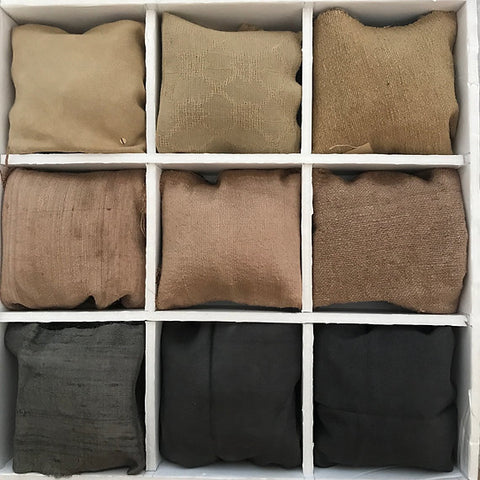
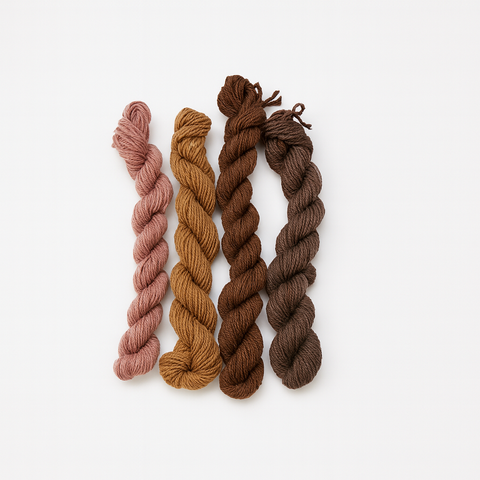
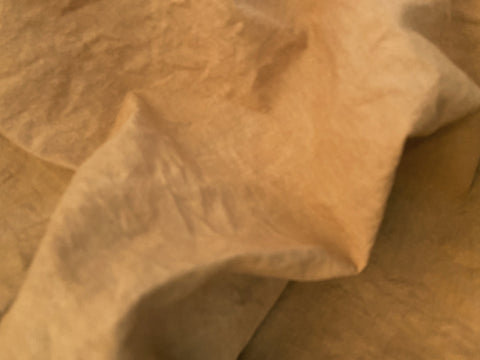
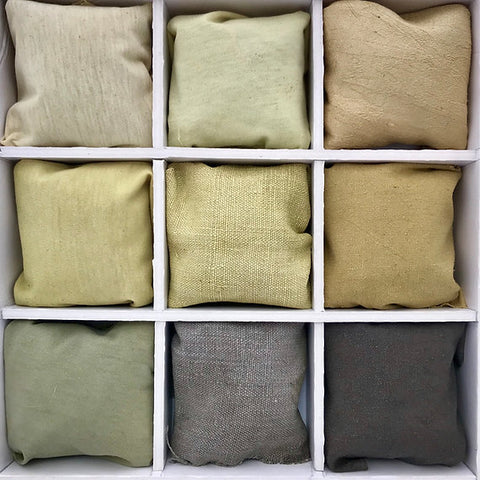
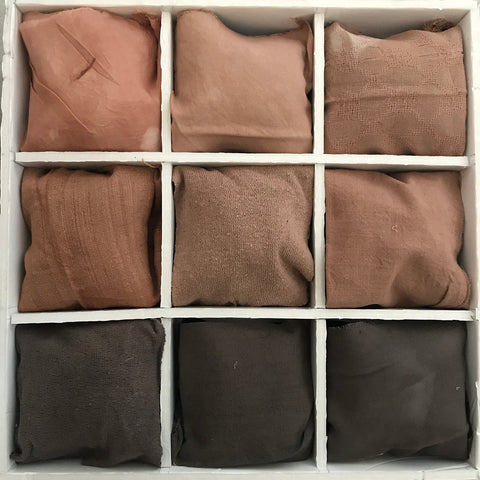
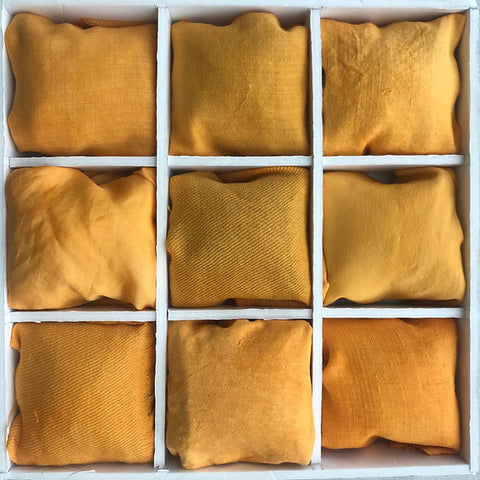
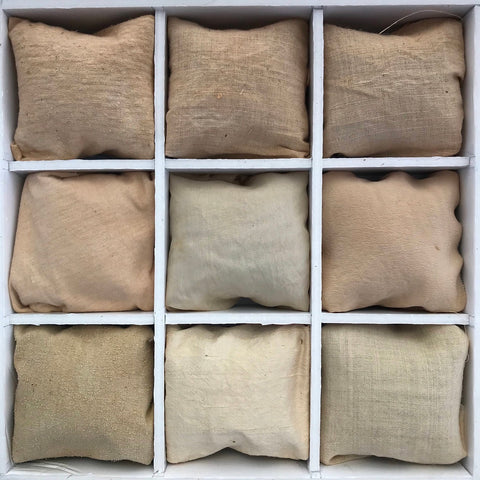
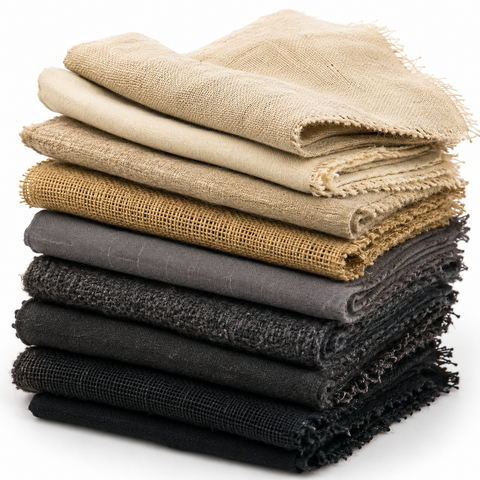
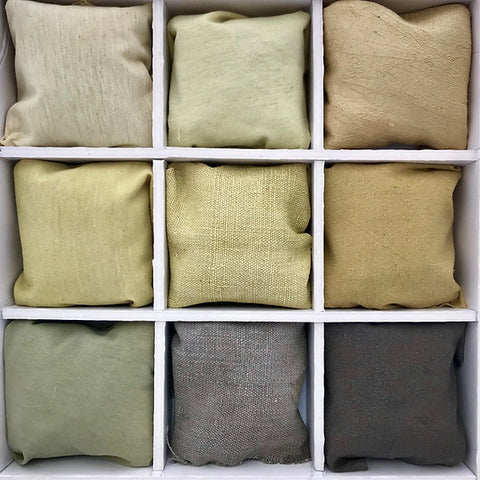
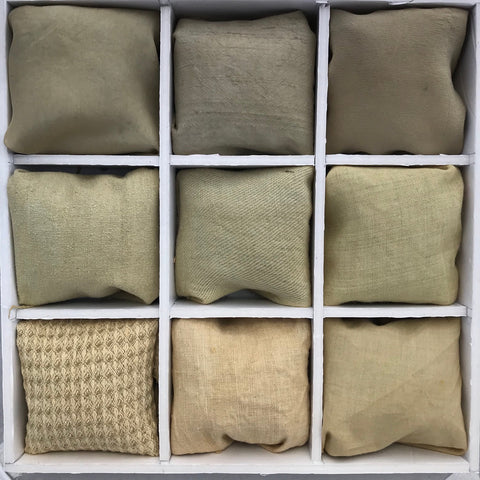
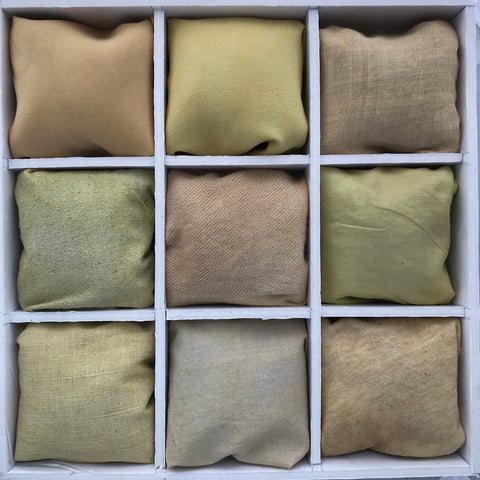
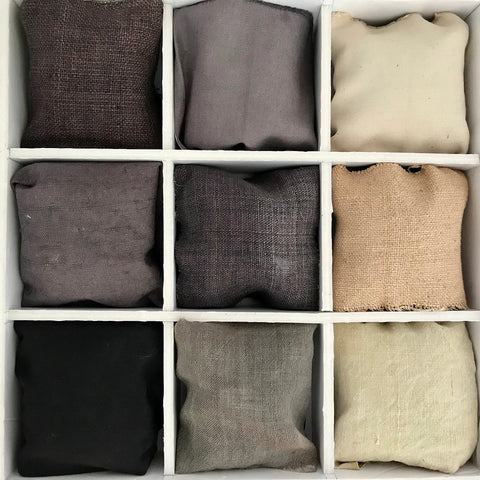
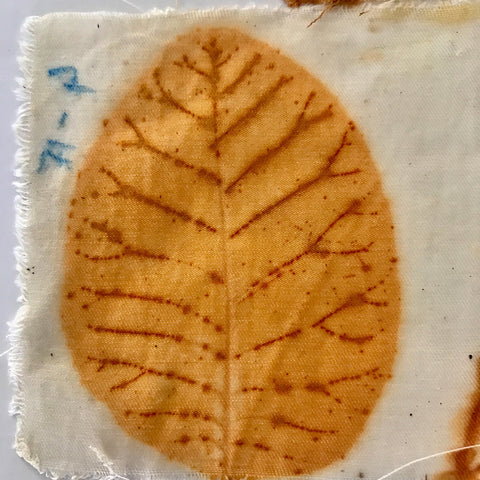
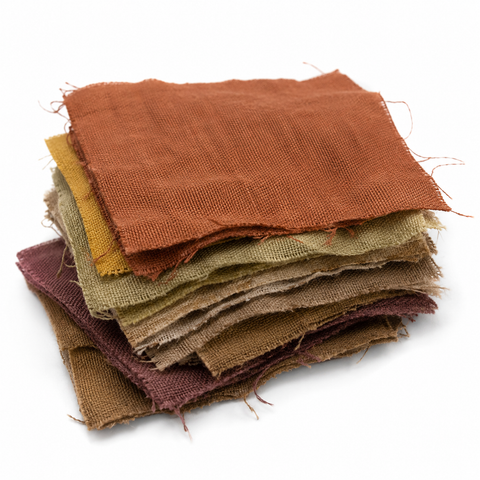
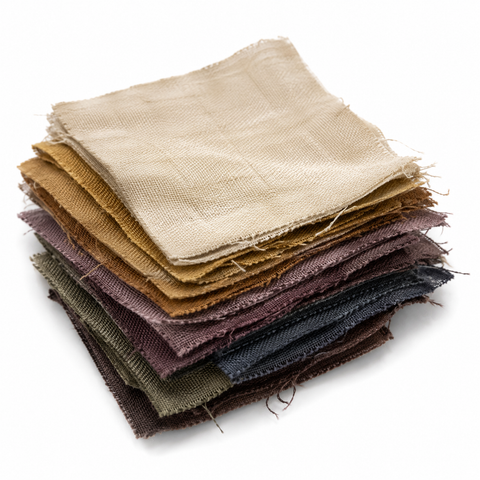
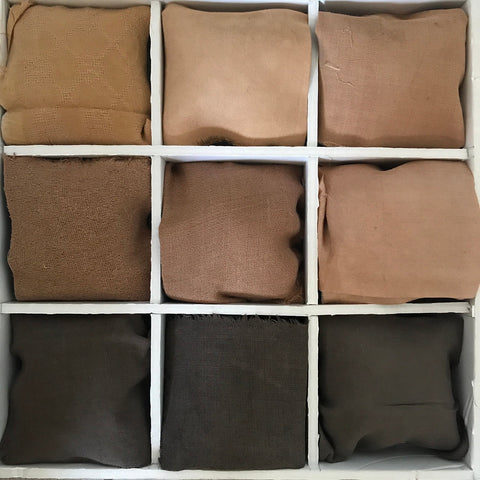
Freshly dyed fibers usually begin as orange-beige, warm honey, or caramel. As the Kakishibu oxidizes, the color continues to deepen over several days or weeks, developing into rich chestnut, walnut, and chocolate brown. Direct sunlight significantly accelerates this process.
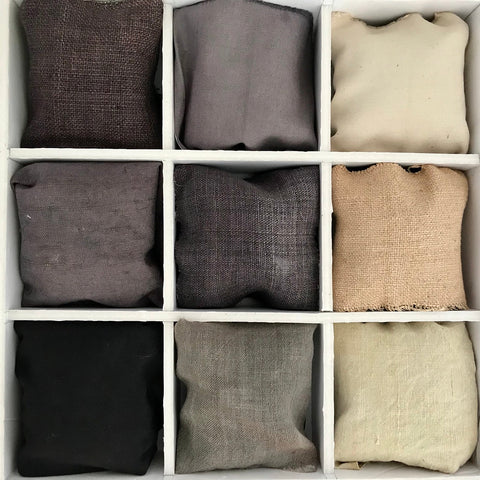
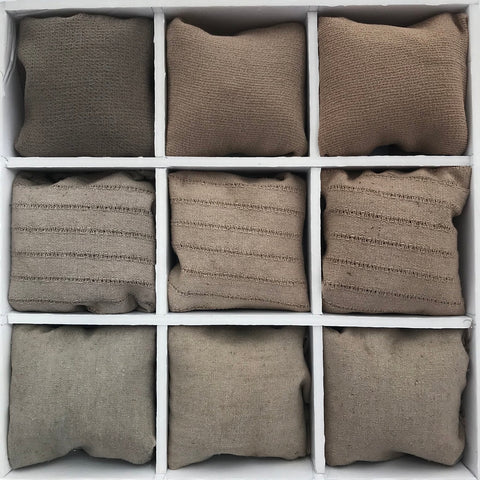
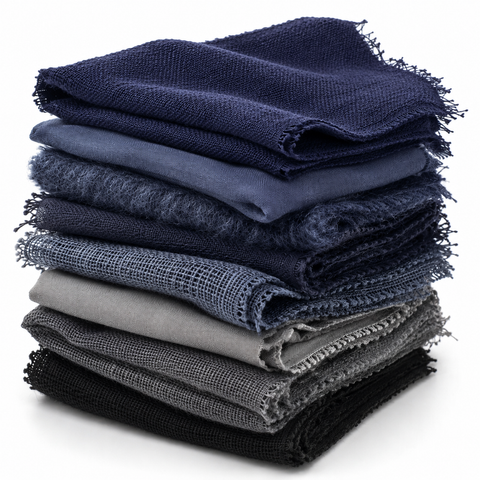
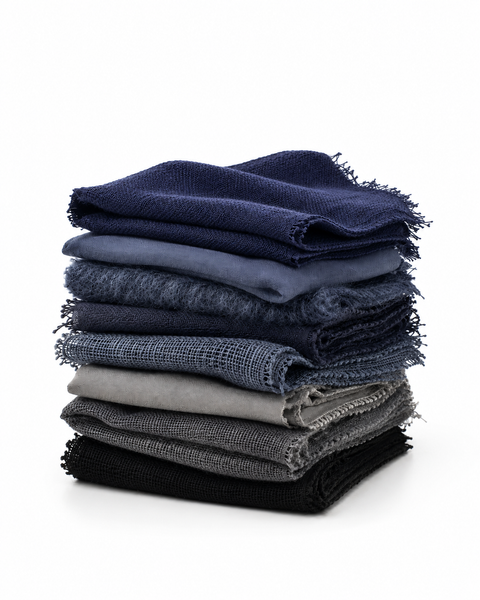
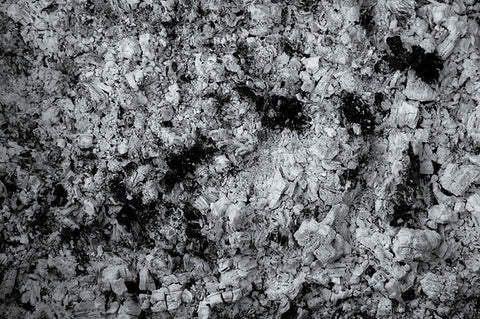
An after-treatment with ferrous sulfate transforms the warm brown tones into weathered gray, charcoal, and near-black shades.
Kakishibu is used according to the concentration of the dye solution rather than strictly by weight of fiber.
Light solution — approximately 25 grams per liter of water
Mix the Kakishibu powder with warm water, stir to fully dissolve. Allow the solution to stand for approximately four hours before use. During this time, it may become slightly thick or syrupy.
Thoroughly scour the material before dyeing. Wet it evenly, place it in the Kakishibu solution, and allow it to soak for approximately 20 minutes.
Remove the material, return all the squeezed-out liquid to the pot, and hang or lay it out to dry. Repeat the dipping and drying process until the desired depth of color is reached or the solution has been absorbed.
For the deepest color development, expose the dyed material to direct sunlight between applications and during the following days. Turn or reposition the material regularly so that it develops evenly.
As a general guide, 25 grams of Kakishibu dissolved in 1 liter of water is sufficient to dye approximately two cotton T-shirts to a medium shade using around three applications. Actual coverage will vary according to fiber type, fabric weight, absorbency, and the depth of color desired.
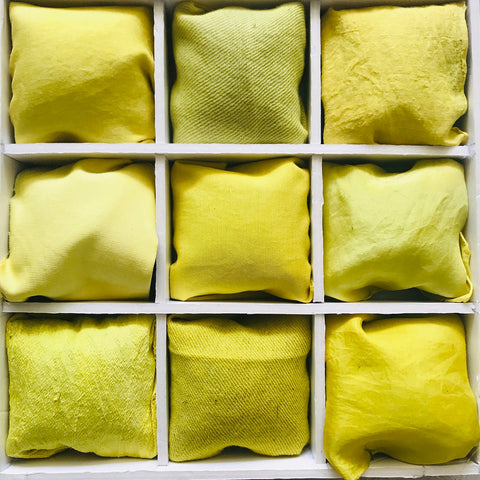
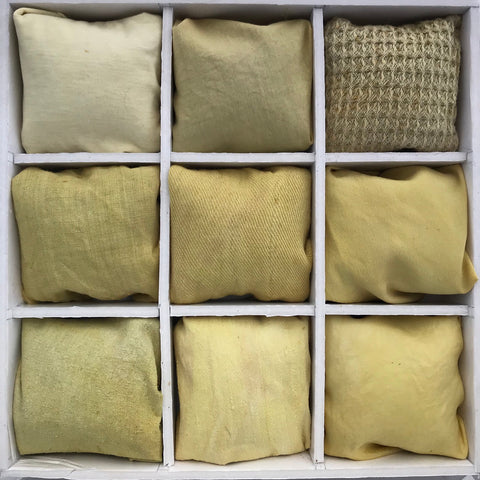
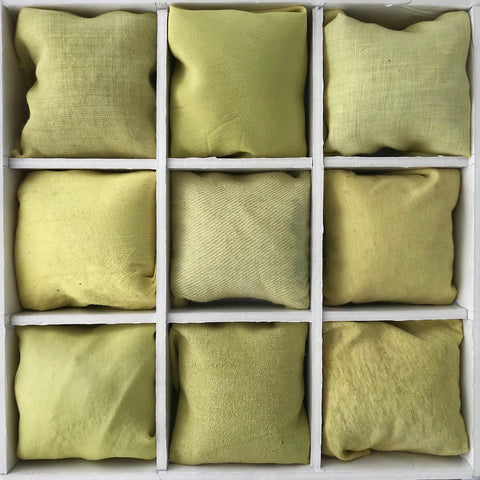
One application: Soft orange-beige to warm honey
Repeated applications: Caramel, chestnut, walnut, and deep chocolate brown
Sunlight: Gradually deepens and warms the color through oxidation
Ferrous sulfate: Produces weathered gray, charcoal, and near-black shades
Wood: Accentuates the natural grain while creating a traditional protective finish
In addition to its distinctive earthy color, Kakishibu has traditionally been valued for its ability to impart:
These characteristics have made Kakishibu popular not only with natural dyers and textile artists, but also with paper makers, leather workers, basket makers, and woodworkers.
The name Kakishibu comes from the Japanese words kaki (柿), meaning persimmon, and shibu (渋), meaning astringent.
Traditional Kakishibu is produced by harvesting unripe persimmons when their tannin content is particularly high. The fruit is crushed and pressed, and the extracted juice is fermented and aged to create an exceptionally tannin-rich liquid.
Historically, Japanese artisans used Kakishibu as both a dye and a practical protective finish for textiles, fishing nets, baskets, washi paper, wood, and other natural materials.
Botanical source: Diospyros kaki
Origin: Japan
CI Natural Dye Number: None assigned
Traditional Japanese fishing nets were treated with Kakishibu to increase their resistance to water, mildew, insects, and decay. Rather than functioning only as a colorant, Kakishibu helped extend the useful life of materials that were constantly exposed to demanding conditions.