Join me for immersive natural dyeing workshops in San Miguel de Allende (Mexico), Amersfoort & Franeker (Netherlands), and Lautrec & Limoux (France) — where tradition, craft, and creativity come together.
Start typing to search products
Sold out
Sold out
Sold out
Sold out
Sold out
Sold out
Sold out
Sold out
Sold out
Sold out
Sold out
Sold out
Sold out
Sold out
Sold out
Sold out
Sale
Sold out
Sold out
Sold out
Sale
Sold out
Sold out
Sold out
Sold out
Sold out
Sold out
Sale
Sale
Sold out
Sold out
Sale
Sold out
Sold out
Sold out
Sold out
Sold out
Sold out
Sale
Sold out
Sold out
Sold out
Sold out
Sold out
Sold out
Sold out
Sale
Sold out
We guide you step by step.
Create with Plant-Based Dyes & Natural Textiles — Your Guide to Choosing the Right Materials
Pure bases for natural creation
| Fabric | Why it's special | Beautiful depth and texture |
|---|---|---|
| Silk Noil | Soft, nubby texture | Botanical printing & layered color |
| Handspun Cotton | Breathable, earthy feel | Immersive dyeing & stitching |
| Khadi Cotton | Hand-spun, handwoven, rich in tradition | Deep, soulful tones & texture |
Sourced directly from small-scale weavers in India, Nepal, and Ethiopia — supporting traditional craft and dignified livelihoods.
Pure bases for natural creation


Essential partners in dyeing
Natural dyes don't work alone, they need a little help to bond with the fabric and stay vibrant over time. That's where mordants and assists come in.
Mordants like alum or iron prepare the fiber to take on color, while assists (like chalk, tannins, or cream of tartar) help shift shades, adjust pH, or improve fastness.
This section includes the basics I use in my own practice, tried and tested, and as low-impact as possible.
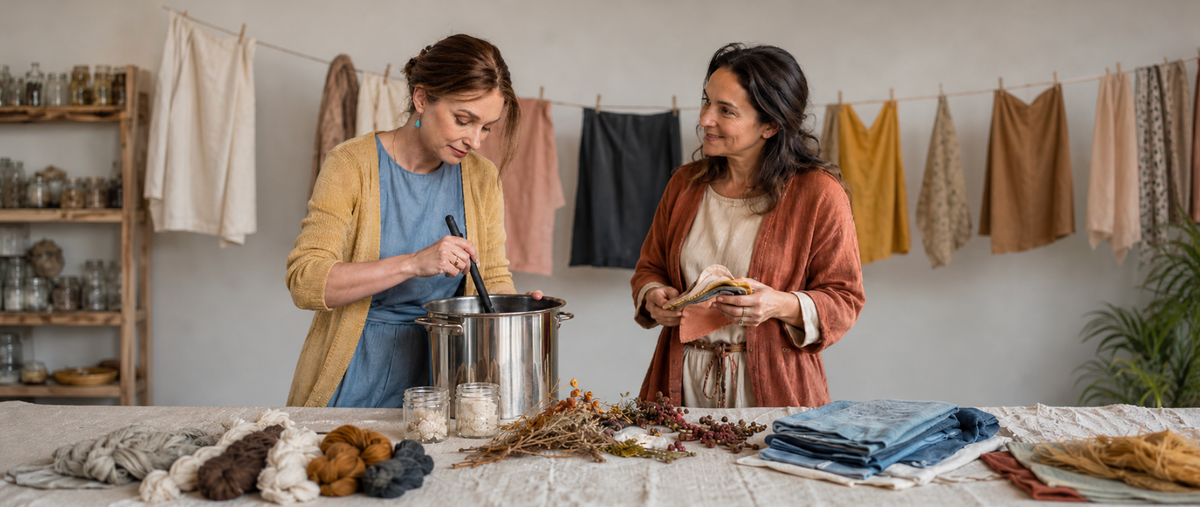
A peek into daily life in the workshop — raw materials, process, and finished pieces.