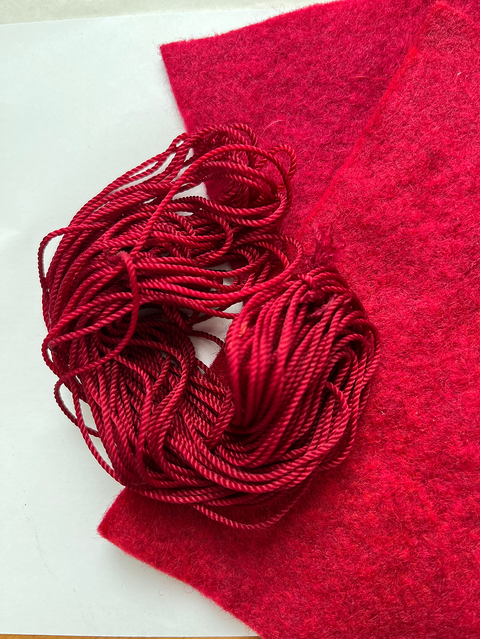
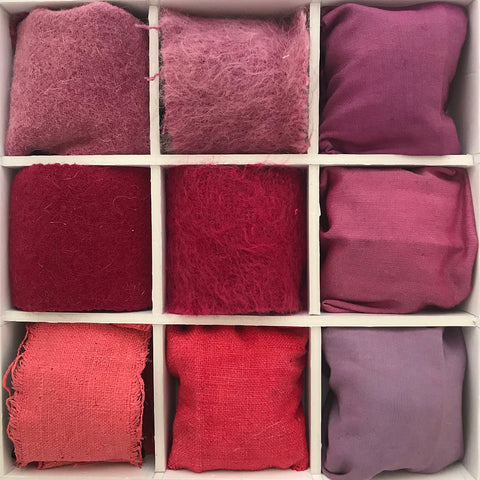
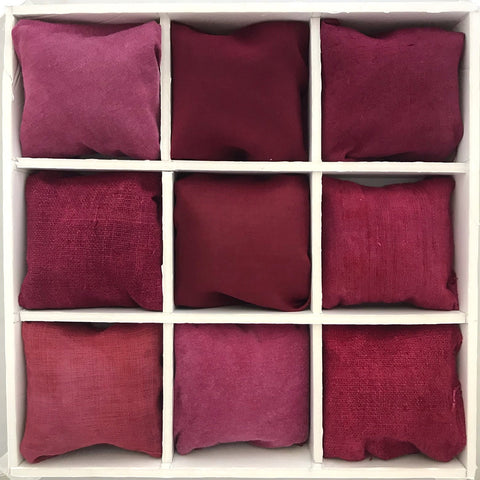
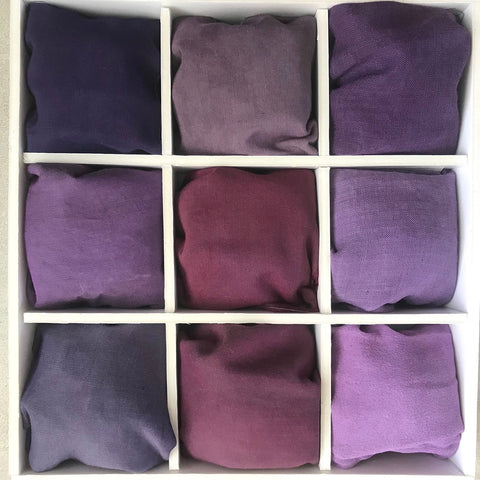
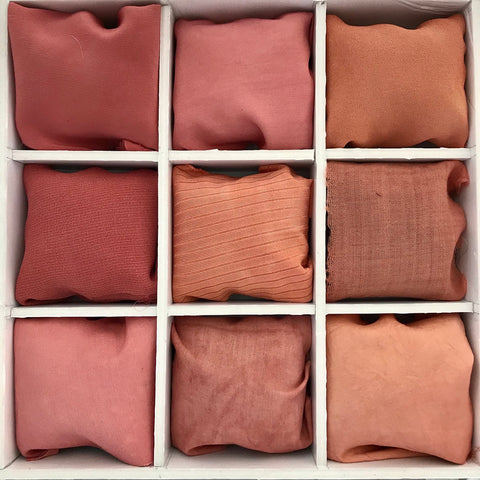
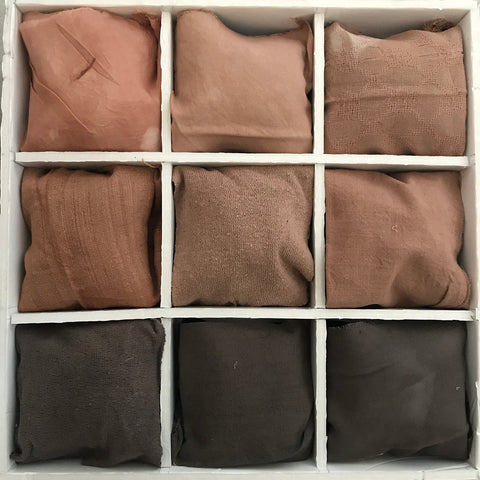
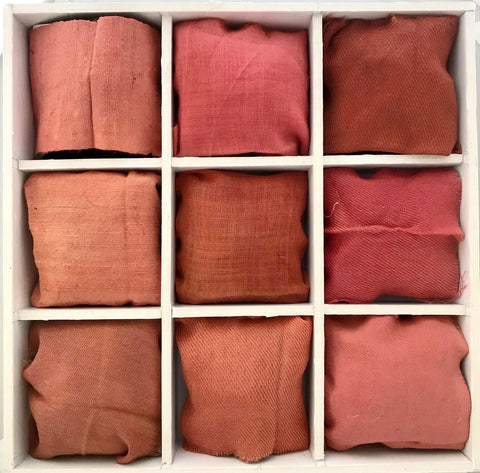
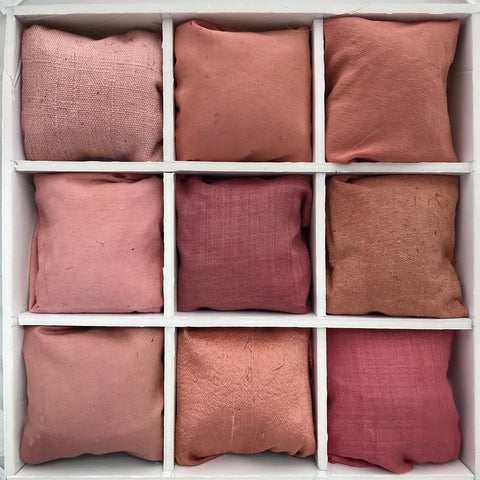
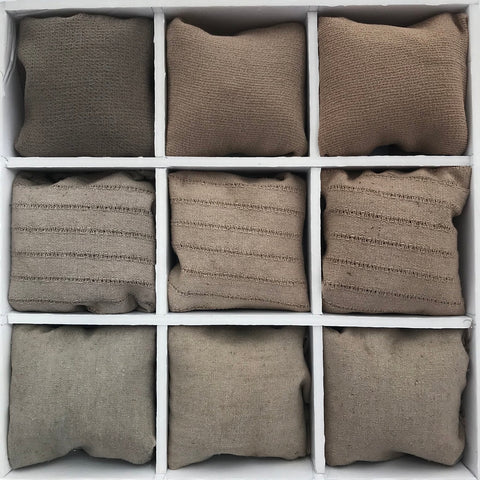
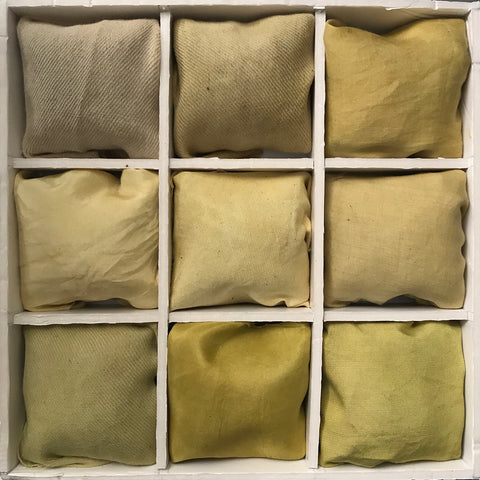
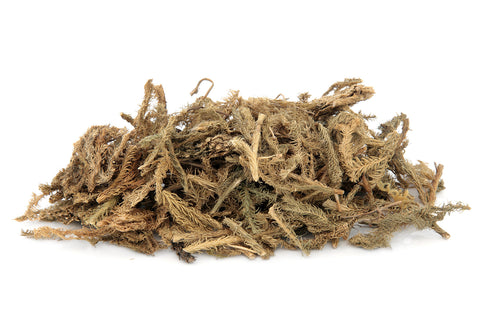
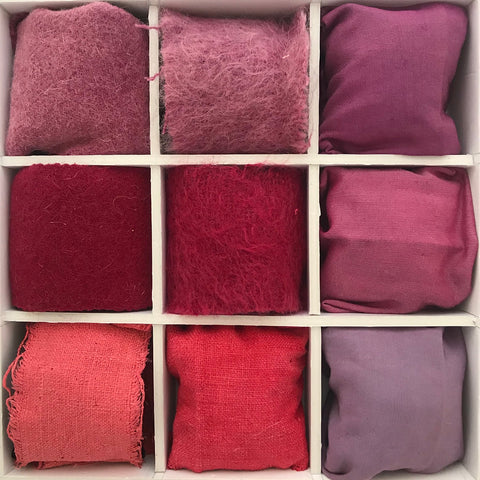
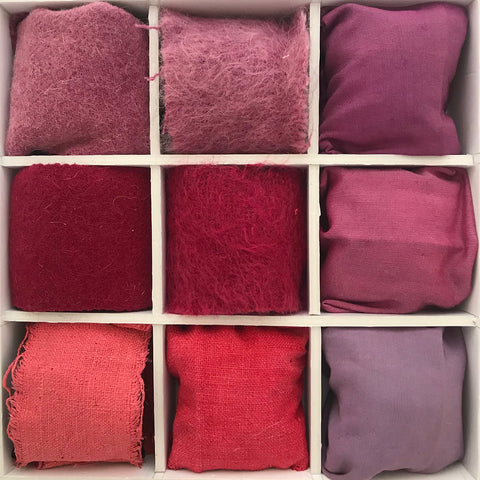
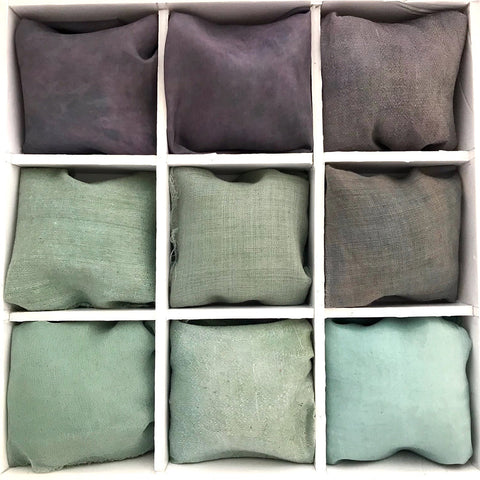
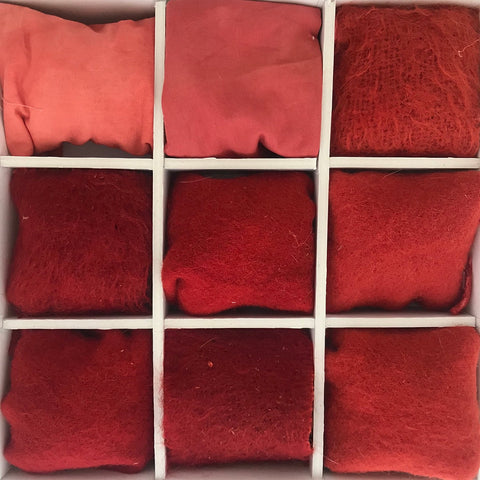
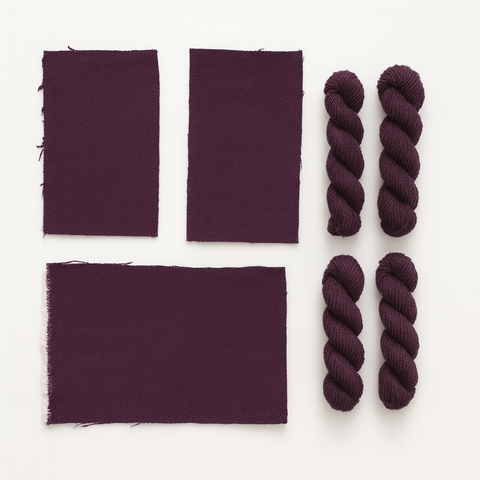
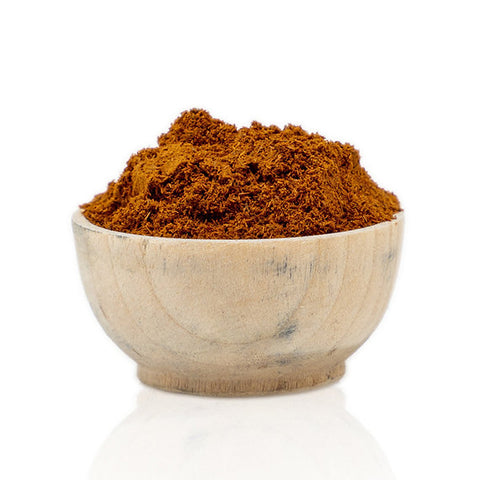
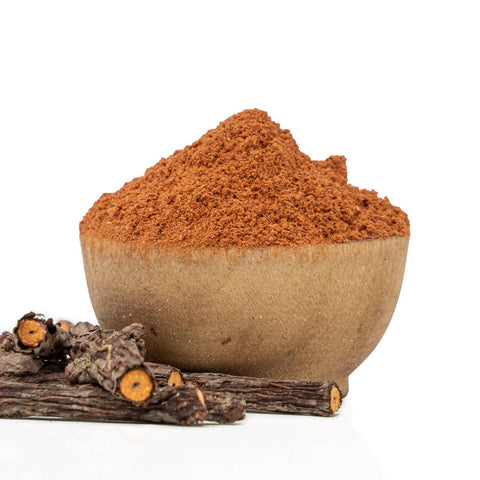
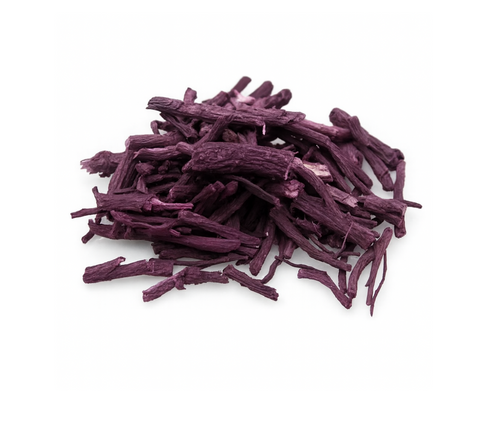
Lithospermum erythrorhizon, a plant species in the genus Lithospermum. Commonly called purple gromwell, red gromwell, red-root gromwell and redroot lithospermum. Also known as Shikon because the main dye compound is Shikonin, which is the chemical mirror image of the more widely used dye compound alkanin that is found in dyer’s alkanet. Shikonin and alkanin are both naphthoquinones. [...]
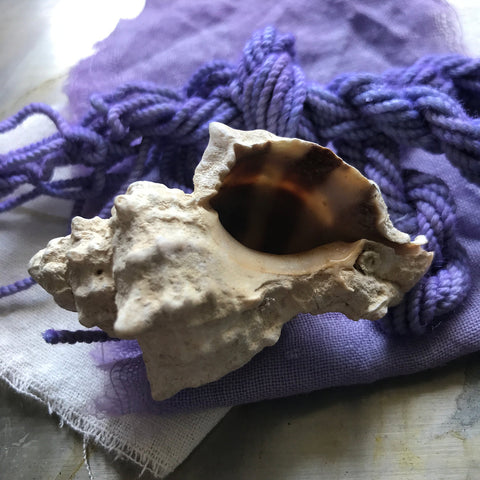
For centuries, the precise nature of the Biblical tekhelet, the sacred blue mentioned in the Torah, remained an enigma. In the Book of Numbers (15:38), we read: “Speak to the people of Israel, and tell them to make tassels on the corners of their garments throughout their generations and to put a cord of blue [tekhelet] on the fringe at each corner.” But what was tekhelet, and [...]
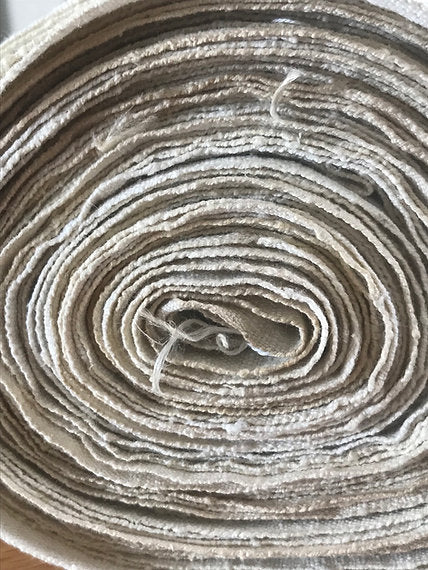
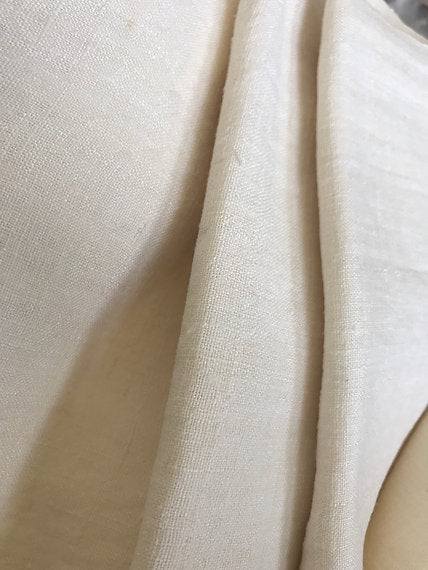
How to Recognize Foxing on Antique Linen In my store I have had antique linen for many years, your can read more about this linen here. The fabric often has yellow stains when we open it up, this is called foxing. These are not regular stains, we know this since the fabric has been rolled [...]
Linen is one of the oldest, most versatile, and most eco-friendly textiles in Europe. Made from the flax plant, it is strong, breathable, beautiful, and long-lasting. In the Netherlands, linen has a deep and fascinating history, connected not only to trade and textile production, but also to family life, marriage traditions, and women’s domestic work. [...]
GOTS vs. FDA What’s the Difference and Why It Matters GOTS stands for the Global Organic Textile Standard, the leading worldwide certification for organic fibers. It regulates the entire textile supply chain from field to finished fabric and it focuses on environmental impact, worker safety, and chemical safety. Only substances on its Positive List may [...]
If you’re wondering how to fix natural dye color after it fades or shifts, start by diagnosing whether the problem is a mordant issue, a pH imbalance, water chemistry, or an aftercare failure. You followed the recipe exactly. The color looked stunning in the pot, rich and deep and exactly what you envisioned. Three washes [...]
From carefully calibrated wool samples to slow stitching with local makers, this residency held both structure and openness, color, process, and the kind of connection you can’t really plan.
can natural dyes fight germs? what the research really says (and why we don’t slap it on product pages) Look, I use natural dyes because they are the most beautiful to me, but here is another to give it a try: A growing body of lab research shows that several traditional colorants can also reduce [...]
Natural dyeing is a beautiful way to add eco-friendly color to fabric, yarn, and even paper. Many dye plants thrive in home gardens, giving you a vibrant palette from your backyard. Here are 10 plants you can grow yourself, with their colors, pros & cons, and USDA grow zones so you can plan your dye garden smartly. 1. Marigold [...]
In this blog I am going to answer the most basic question I get a lot: how do I mordant fibers. What’s a Mordant, Anyway? In simple terms, a mordant is a substance that helps dye bond with your fiber. Think of it like a matchmaker, introducing the color molecules to the fabric and saying, [...]
Sometimes those folding tables just sit (well, stand) too low for comfort, when you are dyeing, ecoprinting, or when you are setting up a market stall. Within minutes of working on a regular hight table, I develop nasty lower back pain that is very hard to get rid of. So I bought bed risers, but [...]
There comes a time in every dyer’s life when you’re staring at a piece of fabric, wondering: What in the world is this made of? Maybe you found it in a dusty corner of your stash, or someone lovingly gifted you “a natural fabric” with no label. (Spoiler alert: “natural” is often wishful thinking.) Before [...]
Reflections on Gutau’s Blaudruck-Fest, always the first Sunday in May On the first Sunday in May the small Mühlviertel village of Gutau (Upper Austria) wakes up feeling blue. Market stalls spill out from the main square, block-printed table linens flutter on washing lines, and the smell of a fresh indigo vat drifts from the old [...]
Natural dyeing in the youngest democracy in the world. I traveled to Timor Leste in November 2024 at the invitation of Hilly Bouwman, founder and manager of RELOKA. This NGO is a training, production, and marketing initiative to promote the capacities of persons of different abilities. ReLoka creates environmentally responsible products, using local and recycled [...]
Workshops should be spaces of creativity, learning, and respect—places where we can focus fully on the art of natural dyeing and printing without distractions. That’s why I now have clear terms and conditions in place, as well as a health waiver, to protect both my participants and myself. These are not just formalities; they ensure [...]
I have never been a great fan of organic vats, mainly because I do not really ‘get’ them and I have had some major fails (think 30-liter henna vat rotting on a balcony. That stinks). I understand this is a ‘me’ problem. I am also not around the studio for up to a month, several [...]
I love to be inspired by what is around me. When I let the dogs out in the (very) early morning, I witness the morning mist creating layers of soft grays and pinks where the sun comes up behind the hills. I want to recreate those shades in natural dyes for a winter-inspired palette. The [...]
Last year, I shared a month-by-month account of my year with natural dyes. It was a gratitude exercise for me—a chance to reflect on my accomplishments. My inner critic often diminishes my efforts, and my memory is fleeting, so taking a moment to appreciate the beauty of the results and the connections I’ve made is [...]
Indonesia, with its rich biodiversity and long tradition of craftsmanship, is a haven for natural dye enthusiasts. This archipelago of more than 17,000 islands is home to a treasure trove of plant-based dyes, each deeply embedded in local culture and heritage. The lush landscapes provide abundant resources, while centuries-old techniques bring out the vivid hues [...]
In my previous blog, I shared tips for more sustainable washing practices to care for your naturally dyed clothes. In this blog, let’s look into three clean alternatives that are non-toxic and 100% biodegradable. Long before the advent of chemical detergents in bright plastic bottles and bags, the earth offered its gentle, abundant gifts for [...]
Indonesian weaving is a vibrant tradition filled with unique techniques, materials, and motifs, it is diverse as the archipelago is large. Traveling in Indonesia and Timor Leste for one month, was not nearly enough to learn all I wanted, but it gave me a beautiful glimpse into a rich cultural heritage that is very much [...]
Natural dyes have surged in popularity, and for good reason. They provide vibrant colors, unique patterns, and a connection to age-old crafting traditions. However, once you’ve adorned your wardrobe or home with these beautiful, sustainably dyed textiles, you may wonder how to care for them properly. To make sure they last as long as possible, [...]
We should be very concerned about this mass textile consumerism. Some statistics: We can only make a dent in these numbers when more and more people start rethinking the way they dress. I have not visited a chain store for clothes in the last few years. 90% of what I own is sustainably made, where [...]
Create a unique hand-dyed textile using simple ingredients. I have been playing around with resist paste in combination with natural dyes when I was after some specific visual. There are many types of resists and they can be complicated or straightforward. I will show a few options, and then also show what I did (which [...]
I am still buzzing a bit from last week. I spent 6 days with two groups of students in The Netherlands teaching what I love so much: natural dyes and botanical printing. Let me start with the location. I was born and raised in Amersfoort, where my family lived and still does, for many generations. [...]
When I discovered aluminum triformate, it was exactly what I had been looking for: A cold process, no heating needed, and the possibility to reuse the mordant multiple times. Furthermore, the mordant leftovers can be easily disposed of and pose no particular issues for the environment. Alum (potassium aluminium sulfate) in itself as a mordant [...]
Sukumo indigo vats have a reputation for being mysterious, complex, and (if we’re honest) intimidating. After reading countless traditional recipes and trying to make sense of them in a modern studio, I realized something: most explanations either romanticize the process... or make it unnecessarily complicated. So I decided to test it myself. Sukumo indigo has [...]
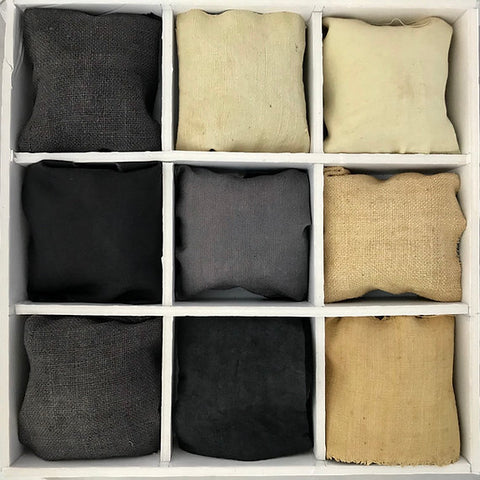
If you have been reading my blogs you have seen a thing or two about creating dark shades using the magical collusion of tannins with ferrous sulfate. (See this blog) In this blog, we are going to explain why there is a particular order you should pay attention to. First: how does it work? This [...]
It is almost the end of the Gregorian year. What a year it has been (in many, very conflicting ways). I feel that before I can start setting goals for 2024, I should be looking back at 2023 with gratitude. I feel that after a good few years of working really (really) hard, I can [...]
Today marks exactly two months since the ‘black Shabbat’ in Israel. That day I woke up disoriented at 6.30 to sirens and explosions, and life has not been the same since. In hindsight, I can recognize I am severely traumatized, as we all are. What I did not realize is what big a toll it [...]
Or maybe, how it is not. I am on a strict diet of grief and stress. Mourning, shock and fear are pulling at the hems of our tight knit community. This is a small country, everybody knows everybody. Or you know someone who knows someone. The feeling of insecurity is very, very real. It seeps [...]
There have been a lot of posts from me on social media about Tzitzit, and people are asking me left and right: what are Tzitzit. So here is another installment of “Things you did not know about Jewish Life”. Tzitzit are fringes or tassels that are worn by Jewish men and boys from age three [...]
Just now, I received an email that made me scream in horror: Hello this is a silly question but, I accidentally ate some of this Himalayan Rhubarb Extract thinking it was a spice is it non toxic? Dear people, beloved customers, please please store your dyes and mordants in the correct way. I am not [...]
“But why are you putting up a recipe here Suzanne? Is this not a site about natural dyes?” You are 100% correct. But it is also Rosh HaShannah, our Jewish New Year, and I am cooking up a storm. All the food revolves around ‘simanim’, tokens for the new year. For example: Apples and honey, [...]
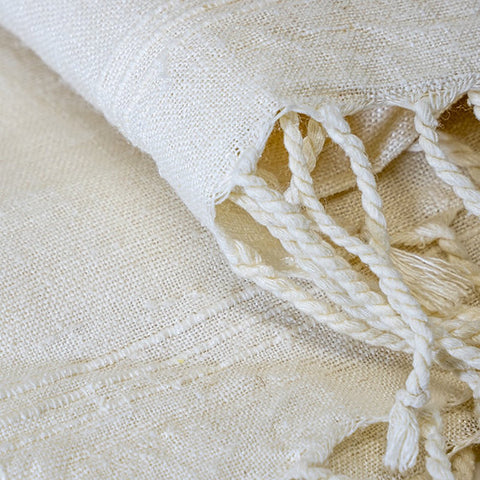
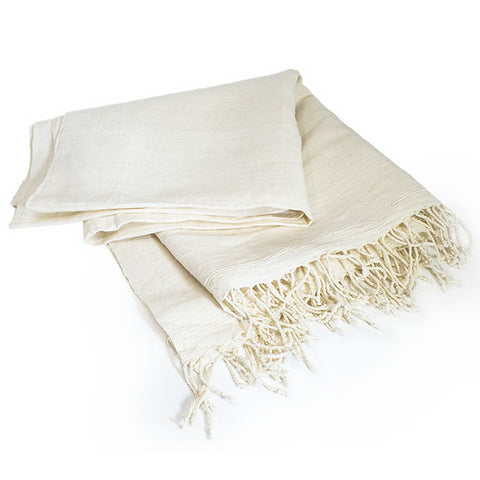
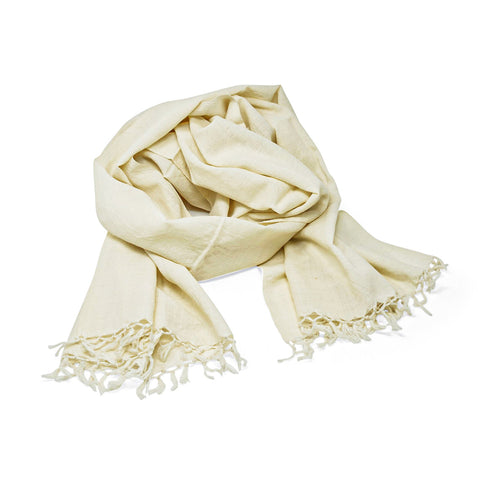
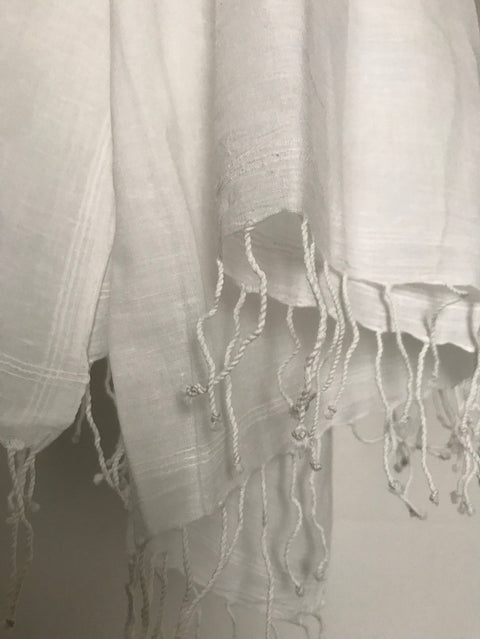
I am always looking for textiles that are unique, that have additional meaning, and that support a community. So when I got introduced to a Kechene weaving community in Addis Ababa through connections in Israel and a young man named Abere, I knew I had to overcome all the logistic and cultural challenges to make [...]
In my quest to give a more profound, layered meaning to my work, I have been diving increasingly into the history of natural dyes. This has resulted already in specific dye-related trips to Oaxaca-Mexico and the South of France (see also this blog about the 18th-century French dye internship that took place), The Netherlands, and [...]
Paul Gout was the manager and master dyer of the Royal Manufacture of wool broadcloth in Bize, Languedoc. This important factory exported up to 2,750 pieces of wool cloth called ‘Londrin’s Seconds’ per year, mainly to the ports of the Levant. This corresponds to more than 52 km of fabric, dyed in colorfast colors, fast [...]
Chlorophyllin is present in all green leaves, for making extract there are several commonly used plants: alfalfa and Mulberry. Our extract comes from the mulberry tree (morus alba). It has a nice ‘grassy’ smell in the dye pot. Chlorophyllin is used as a food coloring and as a dietary supplement, but we will use it [...]
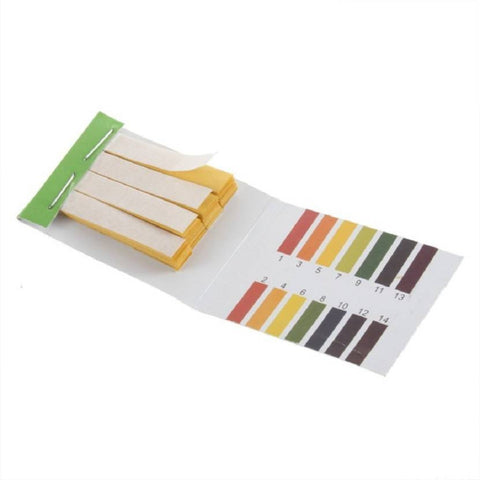
(And why do you need to know?) pH is something you will see a lot in descriptions of natural dyeing processes. In short: pH stands for potential hydrogen, and it tells us how much hydrogen there is in liquids, and how active the hydrogen ion is. That concentration of hydrogen ions is measured in moles [...]
(and what NOT to use) In this blog you will learn how to properly mordant cellulose fabrics, and how to use ingredients from your kitchen to dye them. The most eco-concious way to use kitchen materials is by collecting them and drying or freezing them until you are ready to use them. Use produce nets [...]
Natural colorants can be a great addition to handmade soaps as they add vibrancy and beauty to the product, and can also provide additional benefits for the skin. Here are some common natural colorants used in soapmaking: When using a natural colorful soap dispenser, it’s important to keep in mind that some natural ingredients may [...]
The alum family of triformate, acetate, and lactate are one-step mordants, you ‘could’ do that extra step of tanning, but you do not have to. That is a huge time and water saver! Another added bonus is you need fewer of these mordants. Between 5-10% WOF can be more than enough for a solid mordanting, [...]
When it comes to natural dyes, there are several options available for textile artists and home dyers. In our webshop, you can find raw dyestuffs, dye powders, and extracts, and very often we will have more than one version for a specific dye material. In this blog post, we’ll break down the differences between the [...]
A lot has been said about the sustainability of different fibers, and silk has been getting a bad reputation in the last years with large companies like ASOS banning silk from their collections under pressure from organizations like PETA. The ease with which fashion companies have removed silk from the collection, immediately had me thinking [...]
The rarest dyes, part of a series of (now) rare natural dyes, see also the blog about Murex and Kakishibu. Kermens is an insect-derived dye, belonging to the group of anthraquinone dyes that include; Armenian cochineal (Porphyrophora hamelii) – carminic acid + kermesic acid Cochineal (Dactylopius coccus) – carminic acid (CI 75470 Natural Red 4) [...]
In the summer of 2022, I visited Mexico for almost a month. I started with a visit to Mexico City and Cuernavaca, then moved to San Miguel de Allende for two weeks to teach a workshop in natural dyeing and botanical printing. I will start this blog by stating I feel that whatever I learned [...]
Origins of Dyeing with Persimmon Tannin The fermentation is done by adding persimmon yeast to the persimmon pulp, then they ferment it over two years. The fermented juice can then be strained and used straight out of the container, or it can be strained, dried, and ground into a fine powder or granules. This powder [...]
Dried, store bought natural dyes. The biggest enemy of natural dyes are light and moisture. So best to store them in a dark, dry and cool place. Glass jars are excellent for keeping your dried dyes safe and moisture free. I use recycled mayonnaise jars but the best ones are the type of mason jars [...]

 Sold out
 Sold out
 Sold out
 Sold out
 Sold out
 Sold out
 Sold out
 Sold out
 Sale
Sale
 Sold out
 Sold out
 Sale
Sale
 Sold out
 Sold out
 Sold out
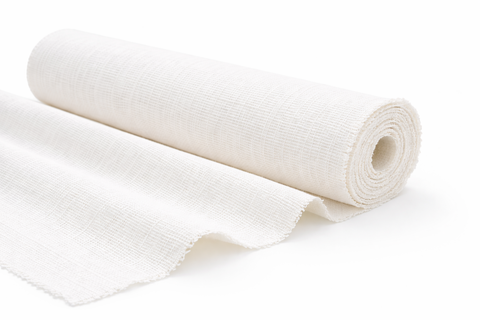
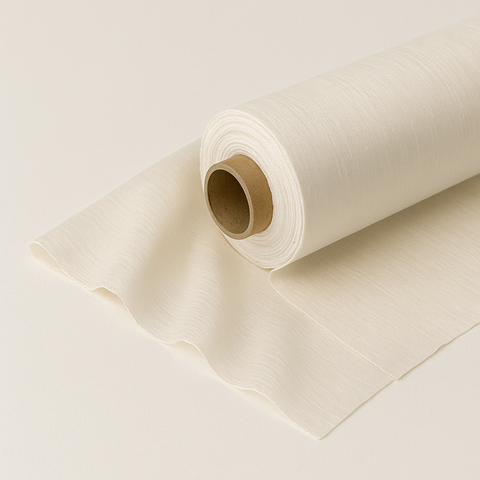 Sold out
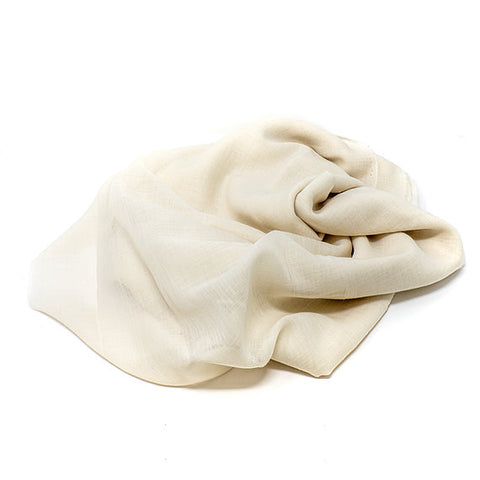
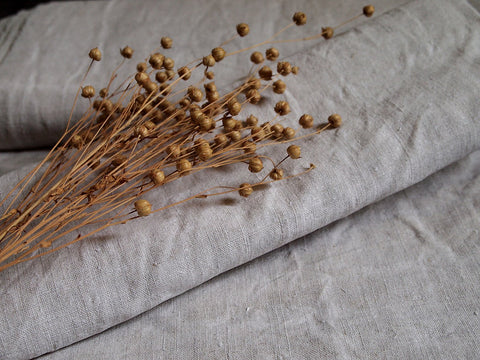
 Sold out
 Sale
Sale
 Sold out
 Sale
Sale
 Sale
Sale
 Sold out
 Sold out
 Sold out